07 November 2012

Why no prosecution of the Pike River Coal Ltd Directors?

I was not going to comment on the Report of the Royal Commission on the Pike River Coal Mine Disaster but I here I go.

Duncan Garner of TV3 describes the Pike River Coal disaster as corporate, Government and departmental manslaughter

John Armstrong of the Herald says the Royal Comission gave the Department of Labour (the former department responsible for employment health and safety a right royal bollocking.

Fairfax says the report is a damning indictment and that cost cutting trumped health and safety.

The Royal Commission concludes that the board of directors completely failed in their governance role over the Pike River Coal Mine Limited. The Commission rejected Board Chair John Dow's testimony that "no safety concerns were reported to me". I can't argue with that.

So why didn't the Department of Labour 'lay an information' (thats the term in most NZ legislation for 'indict') for a prosecution against the Directors when they filed the informations against Peter Whittal, Pike River Coal Limited (in receivership) and the subcontracting drilling company?

The Health Safety and Employment Act 1992 defines the unsafe workplace offences in Section 49 and Section 50.

The HS & E Act offences are criminal offences as a prison sentence is one of the possible consequences of conviction under Section 49(3)(a).

The two sections state explicitly that 'any person' can be prosecuted. 'Any person' includes directors of companies. Like the Resource Management Act, the offences are 'strict liability'; intention does not have to be proven. Lack of reasonable action to prevent reasonably foreseeable accidents makes the directors worth prosecuting.

However, it's too late now to prosecute the directors. There is a statutory time limit for laying informations/prosecuting in Section 54B and it's six months from the date of the event. That is now a long time ago.

So John "See no evil hear no evil" Dow and his fellow directors are off the hook from any criminal prosecution under the Health Safety and Employment Act.

So that is another major failure of the Department of Labour that has not been reported on in the media flurry so far.

06 November 2012

New James Hansen talk from 10 October

Here is a new talk by James Hansen on climate change and tipping points. It has been uploaded by Cornell University.

Dr. James Hansen of NASA's Goddard Institute addresses 75 international union leaders about the urgency of the climate crisis. The presentation was given in NYC on 10/10/12, and was part of the Energy Emergency, Energy Transition round table convened by Cornell University's Global Labor Institute (GLI), a program of the Worker Institute at Cornell, and the Rosa Luxemburg Foundation.

02 November 2012

And when I awoke I was alone the exporter had flown Norwegian Wood isn't it good

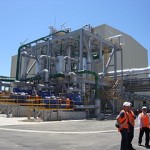
The Mighty River Power 100MW geothermal power plant at Tasman Mill, Kawerua, NZ Norwegian Wood and newsprint transnational Norske Skog Tasman (NZ) Ltd 'exports itself'. Mr February looks at the flight of another manufacturer and CO2 emitter and exporter as it lays off staff and reduces production. Wasn't the very generous free allocation of units in the NZETS meant to keep exporters like Norske Skog Tasman in New Zealand? Or have we just removed the price signal from exporters for no valid reason and stuffed the NZETS?

The other week Gareth tweeted about a good article in the Herald by Chris Barton.

Chris Barton reported that the Norwegian-owned newsprint-maker and transnational Norske Skog Tasman NZ had joined the ranks of export businesses like Rio Tinto Alcan NZ/NZ Aluminium Smelters who are exporting jobs off shore.

Norske Skog is shutting down one of two newsprint machines at the Tasman Mill, in Kawerau, due to lowered demand for newsprint.

At the same time Norske Skog is building a new $A84 million plant in Tasmania with some substantial help from the Australian Federal government (A$28 million grant) and State government (A$13 million loan).

Chris Barton noted some strong questions asked of the Government such as "what is being done for jobs"? And strong criticisms of the Government's naive "market will take care of everything" approach.

Chris Barton mentioned the NZ emissions trading scheme (NZETS) only briefly in passing, as he noted the rock-bottom NZ carbon price and the poor despairing carbon foresters.

So that prompted me to look at how Norske Skog Tasman NZ fits into the NZETS. What are the greenhouse gas emissions of the Norske Skog Tasman pulp mill? Is Norske Skog Tasman regulated by the NZETS? Have they ended up with a large free allocation of emission units (like NZ Aluminium Smelters Ltd) ostensibly to protect their international competitiveness and to keep the jobs in NZ?

Norske Skog Tasman uses geothermal steam from the Kawerau geothermal field for heating and electricity generation in its newsprint mill. Geothermal steam naturally contains carbon dioxide and methane which are released when the heat energy is transformed.

The use of geothermal steam for energy is covered by the NZETS as an energy sector emission. So Norske Skog Tasman must report its greenhouse gas emissions and obtain and surrender emissions units.

There is a specific emissions factor in the Climate Change (Stationary Energy and Industrial Processes) Regulations 2009 for Kauwerau's geothermal steam. The factor is 0.0275 tonnes CO2-2 per tonne of geothermal steam used.

Norske Skog Tasman's production of newsprint is included as an emissions-intensive trade-exposed activity eligible for a free allocation of 0.4911 emission units per tonne of uncoated newsprint, at the highest level of assistance; 90%.

So far, so much like NZ Aluminum Smelters/Rio Tinto Alcan NZ.

Let's start with a 'back of envelope' calculation of the units Norske Skog Tasman should surrender (the NZETS gross carbon price).

According to the Kawerau Geothermal Field Background Study, Mighty River Power supplies 285 tonnes of geothermal steam per hour to Norske Skog Tasman, who on-sell 26 tonnes to Carter Holt Harvey Wood Products. So net use is 259 tonnes per hour.

Assuming 24/7 production, the annual use is 259 * 24 * 365 = 2,268,840 tonnes of steam per annum. And 2,268,840 * 0.0275 = 62,393.1 tonnes CO2-e. So in a typical year, Norske Skog Tasman should be surrendering very roughly about 62,000 emission units under the NZETS.

How many free emission units were allocated to Norske Skog Tasman? In both 2010 and 2011, Norske Skog Tasman received the fifth largest free allocation of units (after the Smelter, NZ Steel, Methanex and Fletcher Concrete). In 2010, Norske Skog Tasman received 122,826 New Zealand Units (NZUs) for the six-month 2010 NZETS compliance period. In 2011 Norske Skog Tasman received 237,752 NZUs.

Assuming 24/7 production in 2011, Norske Skog Tasman was allocated 381% more units than it needed to surrender (237752/62393.1 * 100 = 381.0550). Thats a way more excessive free allocation than NZ Aluminium Smelters!

However, I might not have the right numbers. My calculation may be wrong. Why don't I ask the Environmental Protection Authority under the Official Information Act for the exact number of units surrendered by Norske Skog Tasman. Watch this space.

Alternatively lets look at Norske Skog Tasman's annual financial statements (PDF) for the 2011 calendar year.

Note 24 helpfully records that Norske Skog Tasman received 119,646 units in 2010 and 241,825 units in 2011. They surrendered only 10,754 units and sold 160,000 units, and had 190,717 units left at 31 December 2011.

The accounts show that in 2011 Norske Skog Tasman was allocated 22 times more units than it needed (241,825/10,754 = 22.49). The units allocated to protect jobs and export competitiveness, were not 90% of units surrendered. They were not 100% of units surrendered. The units allocated exceeded the units surrendered by a factor of 22!.

I can still here an echo of voice saying "You have left out the electricity allocation factor! You are wrong wrong wrong!" Well, yes, the industrial free allocation factor of 0.49 units per tonne of newsprint allegedly includes compensation for NZETS-related electricity price increases our manufacturing emitter is subject to. This rationale and the factor of 0.49 units per tonne were approved in this Cabinet paper. However, the cabinet paper provides no explanation of how the factor of 0.49 units per tonne of newsprint was calculated.

The electricity allocation factor has also been the subject of a consulation process and there is an emitters contact group for it as well.

However I think the idea that manufacturing emitters need compensation for NZETS-related electricity price increases is a smoke-screen. Norske Skog Tasman has not had its electricity price increased by the NZETS.

According to the Kawerau Geothermal Field Background Study (PDF), Norske Skog Tasman and Mighty River Power (MRP) have "..a power purchase agreement whereby NST (Norske Skog Tasman) contracted to take a majority of MRPs generation. Due to the fact that MRPs plant is grid tied, this is effectively a financial agreement offering NST price certainty and MRP a customer contracted to take the majority of supply."

The Tasman Mill is not just a plant connected to the grid. It was built to use geothermal power, just as Tiwai Point Smelter was built to use Lake Manapouri's hydro power. The Tasman Mill is joined at the hip to the Kawerau geothermal field. The newest Mighty River Kawerau geothermal generation plant was built on the Tasman Mill site. Norske Skog is buying geothermal steam from Mighty River Power and paying MRP as if it was electricity via a financial derivative contract.

To conclude the free allocation part of the analysis; in the example of Norske Skog Tasman, the NZETS free unit allocations are not just a discount of the full NZETS carbon price, the allocations are a transfer of substantial corporate welfare. The units allocated exceed the units they have to surrender by an estimated factor of 22.

And in terms of protecting the international competitiveness of Norske Skog Tasman and keeping jobs in New Zealand, the free allocations have not made the slightest difference. Thats in spite of National Party scaremongering back in 2008 that the NZETS would cause the mill to close. And Catherine Beard of Business New Zealand (formerly boss of the Greenhouse Policy Coalition) still scaremongering in October 2012 that any real cap in the NZETS will cause more job losses Talk about slamming the stable door after the horse has bolted.

Lets look at the real factors affecting whether a commodity manufacturer stays in New Zealand.

If you are a transnational like Norske Skog, you always have the choice of playing off more than one jurisdiction. The country with the smaller economy, like New Zealand, can't match the money of a larger economy like Australia. If Norske Skog had not purchased the Tasman Mill from Fletcher Challenge in 2000, this 'regulatory arbitrage' would not be possible.

Corporate aquisitions that seemed a good idea before the Global Financial Crisis, look much more risky after the Global Financial Crisis. Norske Skog paid $NZ5 billion for Fletcher Challenge's paper and pulp assets. In 2011, Norske Skog was faced with falling international demand and prices and it was considering selling some assets to avoid default on its debt.

Incidentally, Rio Tinto Alcan shares most of these international commodity trader issues; the over-priced debt-funded purchase of Alcan and Comalco by Rio Tinto before the GFC, the Rio Tinto's plan to sell Pacific Aluminium (including NZ Aluminium Smelters Ltd), the low demand for aluminium from the stagnant economies of the Eurozone and the USA and the price and supply competition from Chinese smelters in the huge and growing Chinese market.

Imagine a fictional conversation between John Key and the CEO of Norske Skog.

"So, Yon, you don't mind if I call you Yon? For the Tasman Mill, you kiwis are all online, the demand for newsprint is down. You give me quarter of million of these NZ units that are worth $NZ3 each. No other ETS accepts them. Thats pretty low quality carbon credit, Yon. Now, Yulia Gillard, she gives us $A28 million for new plant at the Boyer mill in Tasmania. Can you match that, Yon? Can you?"

That is the bottom-line, isn't it? New Zealand could never have matched $A28 million, either as a direct grant, or through manipulation of the NZETS free allocation provisions.

To me, the Norske Skog Tasman job losses are a good demonstration of how futile it was to have an NZETS designed mainly to completely avoid any carbon price on transnational exporters. The carbon price has not just been reduced or discounted to Norske Skog, the sign has been reversed so that its an off-balance sheet transfer of corporate welfare to them in the form of emission units. Such transfers are no doubt sought by local managers who are rent-seeking, but they will be irrelevant to the international commodity trade movements that will ultimately determine whether these transnationals stay or go.

26 October 2012

How to write a submission on the Crown Minerals Permitting and Crown Land Bill 2012


Or part two of A mining stealth bomber attack on six tenths of the conservation estate

Here is my submission.

You could also check out Forest and Bird or the Green Party for their suggestions on submissions.


Submission on the Crown Minerals Permitting and Crown Land Bill 2012

I oppose this bill in it's entirety.

I especially oppose:

1) changing the purpose of the CMA is to "promote prospecting for, exploration for, and mining of Crown owned minerals for the benefit of New Zealand"

I consider the present wording of the CMA to be suitable and consistent with providing an impartial and economically efficient regulatory framework for minerals. If a purpose is to be adopted, it should be 'promoting sustainable management of resources', consistent with the RMA and EEZ legislation.

2) changing the Minister's function to include "(a) to attract permit applications".

This function looks like it has been copied from an insurance salespersons job description. Attracting applications is not the role of the Minister as an impartial statutory decision-maker. It is to impartially and fairly apply the law to applications. The new role suggests that the Minister will be partial rather than impartial towards applications that he/she has "attracted". It is also economically inefficient for the Minister to be "picking winners" which is what an attracting applications role suggests. The economically most efficient approach is complete impartiality of the Minister and the Ministry towards all applications.

3) Clause 31(6) which would add an economic benefits test when Crown land access is decided by the relevant Minister to section 61(2) of the CMA.

I am very opposed to this amendment. The consequence will be to undermine the legal conservation status of the 60% of the conservation estate which is not listed in Schedule 4 of the CMA. If passed, the conservation status will be effectively voided as soon as the two Ministers will decide on the grounds of the economics benefits that mining may proceed.

4) Clause 32 which would make conservation access decisions joint decisions of the Minister of Energy and Conservation.

I am very opposed to this amendment.

The consequence will be to undermine the legal conservation status of the 60% of the conservation estate which is not listed in Schedule 4 of the CMA. If passed, the Minister of Energy is unlikely to be neutral and objective. The present Government and its Ministers are unashamedly prioritising economic development over environmental issues.

For example, Minister of Economic Development Steven Joyce has deliberately breached the 'sub judice' rule in his enthusiasm to promote the cause of miner Bathurst Resources in undecided resource consent appeals for the proposed Denniston Escarpment Mine on conservation land (Steven Joyce, 25 September, 2012, 'Minister calls on Bathurst objectors to pull appeals', New Zealand Goverment Media Release http://beehive.govt.nz/release/minister-calls-bathurst-objectors-pull-appeals").

The Minister of Energy Phil Heatley suggested changing the RMA to favour Bathurst in an interview with TV3 (TV3, 28 July 2012, 'Taranaki model for oil & gas exploration – Heatley', http://www.3news.co.nz/Taranaki-model-for-oil--gas-exploration--Heatley/tabid/1356/articleID/262986/Default.aspx).

So I have no confidence that these Ministers can impartially and objectively weigh conservation and economic factors. If the two changes to mining access decisions are implemented, you might as well remove the conservation status of 60% of New Zealand's conservation areas and reclassify them as 'Crown land open for mining', for that is the Government's clear intention in respect of mining. This is completely unacceptable.

The status quo in the CMA should not be changed.

5) I am opposed to changes in how areas are added to Schedule 4 of the CMA. It should remain on the recommendation of the Minister of Conservation. Cabinet and the Minister and the Ministry of Energy and Resources should have no role.

6) I am opposed to the replacement of Schedule 4 and the transfer of it to the Conservation and other acts.

A mining stealth bomber attack on six tenths of the conservation estate

Or How to write a submission on the Crown Minerals Permitting and Crown Land Bill 2012 (the "CMPCB" for short)

Submissions can be made on the Crown Minerals Permitting and Crown Land Bill 2012 until midnight, 2 November 2012. This public service notice was brought to you by Robin Johnson's Economics Web Page.

The Crown Minerals Permitting and Crown Land bill sounds completely eye-wateringly BORING, doesn't it? Yet this bill, if it is passed in it's current form, will have the same effect as re-classifying some 60% of New Zealand's conservation areas from protection to exploitation. The bill is really a sneaky mining stealth attack on conservation areas, after the Government's failure with it's Schedule 4 frontal assault back in 2010.

The Schedule 4 debate in 2010 was over a Government proposal for more mining in some 8,000 hectares of conservation land. The particular conservation areas were all listed in Schedule 4 of the Crown Minerals Act.

Were you surprised to find out that only some 40% of New Zealand's conservation areas have absolute protection from mining? And that protection was not because of the National Parks Act or the Conservation Act. It was through a section of the Crown Minerals Act and a schedule listing of National Parks and other areas in 'Schedule 4' of the Crown Minerals Act - the Act that provides for extraction of minerals.

In March 2010, Gerry Brownlee proposed (on behalf of the 'National Growth Agenda' and the minerals and mining industries) to remove some conservation areas from this Schedule 4. The legal status - conservation park, reserve, or national park - would not change. But the areas would then be legally open for mining access via the Minister of Conservation's approval given under the Crown Minerals Act.

Which is the (rat shit) status quo for the 60% of conservation areas managed by the Department of Conservation (including all conservation stewardship areas)

A mining company can apply at anytime to the Minister of Conservation (currently Kate Wilkinson) for mining access. The Minister cannot accept an application for access to areas listed on Schedule 4. But all other conservation areas, 60% of the total, are fair game. Ostensibly the Minister, in deciding on mining access, must only consider conservation objectives, plans, policies, effects and mitigation and "other matters" (S 61B of the CMA 1991). However, my prime example of how this works in practice is the Labour Government's Chris Carter approving the Pike River Coal Mine in 2004.

After 40,000 people marched down Queens Street in protest and 37,000 people submitted against the idea, the Government said it was backing down and no areas would be removed from Schedule 4 list.

However, the Government thinks that the 2010 Schedule 4 debate is long enough ago to re-interpret the wishes of the thousands of marchers and submitters as supporting a quicker faster streamlined and simplified easier-for-miners access to the other 60% of conservation areas. That is what the Crown Minerals Permitting and Crown Land Bill is all about.

The main way the bill makes it easier for miners is to stop having the Minister of Conservation making the mine access by decision herself. And to stop the decision being mainly on conservation grounds. Instead the bill proposes that mining access will be a joint decision of the Ministers of Energy and Conservation. And the joint decision is to be guided by a new economic benefit test, as well as the land-holding objectives.

How might this change pan out? National always say they are into striking a 'balance' between economic and environmental objectives. And the conservation objectives are still there. To that I say "Get real!"

National and their Ministers are plainly biased towards development. For example, Steven Joyce used a Government press release and a TV ONE Breakfast appearance to breach the 'sub judice' rule when he strongly took the side of miner Bathurst Resources over the Escarpment Mine consents court cases.

Alternatively, lets look and listen to the present Minister of Energy, Craig Heatley on TV3 being egged on by Rachel Smalley, Alex Tarrant John Hartevelt to again take the side of Bathurst Resources. Smalley seems to be choking up when she says "Does the Resource Management Act essentially allow environmentalists to delay delay delay something like this going forward?"

This proposal sucks so much. We charge the Minister of Conservation and the Department of Conservation with managing these areas for their conservation and protection under an act called the Conservation Act (as well as a few other acts). The whole point of conservation areas is that they are legally protected from economic development because it usually harms the native plants and animals and their habitats and landforms. They are to come first. Thats what conservation means. With mining, the native plants and animals and their habitats and landforms are completely destroyed. There is no economic activity as absolutely in conflict with the conservation of nature as mining.

So what is the point of having the majority of conservation areas legally protected for conservation purposes when that protection allows mining to be permitted on the grounds of economic benefit, as jointly assessed by the 'Minister of Mines'?

So I suggest you make a submission opposing this bill via Parliament's website

20 October 2012

Cry, cry for you

Mazzy Star and Hope Sandoval

Cry, cry for you
Just like you knew I wouldn't do
Cry, cry for you
Just like a song in the last light

Should I leave it all away
Not like the kindness that you gave
That's why it never seems the same
Behind your eyes

I stood behind when no one asked me
And took you home after the fight
I drove my car into city lights
Drove down the road that I am on

Cry, cry for you
That's what you think I want to be
Cry, cry for you
An empty heart that sees me through

Cry, cry for you
Just like you knew I wouldn't do
Cry cry for you
Just like a song in the last light

Cry, cry for you
Just like you knew I wouldn't do

18 October 2012

Brother can you spare $3.10 for a flat white or a tonne of carbon dioxide?

In which I have a rant about people begging on Lambton Quay, the fact that the spot price for a tonne of carbon dioxide is the same as for a flat white and the uselessness of the report of the Finance and Expenditure Committee on the Climate Change Response (Emissions Trading and Other Matters) Amendment Bill.


Have you heard the old Tin Pan Alley song "Brother can you spare a dime?" The experience of poverty and the Depression in America summed up in a popular song. The lyrics were written by Yip Harburg, and the music by Jay Gorney in 1931. The version by Al Jolson is very well known, but I like this version by Charlie Palloy and his Orchestra.

I usually start most weekdays getting off a bus on Lambton Quay. From the bus stop I walk along to work looking forward to the first coffee of the day.

I usually note how many people are begging. There are usually a few people begging on Lambton Quay. Who says New Zealand is not in a depression? Not Paul Krugman. 'Brother can you spare a dime' is alive and well.

Except it's sad cardboard signs saying 'Homeless and need help'. Also its at least $3 to $4 for a coffee, not a dime. Not for a long time.

The other price that is less than the cost of a flat white is the spot price of emission units in New Zealand. The brokerage firm OMF reports a spot price each day. Guess what? The last trade of a New Zealand Unit (a tonne of carbon dioxide equivalent emissions) was $3.10.

Carbon News reports spot prices in the range NZD4.50 to NZD5.00 range. The Otago Daily Times reports $4.20 per unit. Stuff reports $2.50 per emission unit.

OMF also have a chart. It shows the collapse of the international carbon market reflected in our own plucky little battler NZ emissions trading scheme. Can any sane person look at this chart and reach any other conclusion than the NZ emissions trading scheme has completely failed?

OMF originally committed the chart sin of not starting the vertical (price) axis at $0. However, reality has intruded. As the New Zealand Unit (NZU) price has relentlessly approached $0, they keep having to move the bottom of their chart closer to zero. That would almost be a small bit of humour in a pretty sad story. If it wasn't the empirical nail in the coffin of pricing greenhouse gas emissions via a NZ emissions trading scheme.

If the $3.10/tonne NZU price is the nail in the coffin, the death notice must be the Finance and Expenditure Select Committee, which today released its report Climate Change Response (Emissions Trading and Other Matters) Amendment Bill

That's the National Government's bill to further weaken the NZ Emissions Trading Scheme. You know, indefinitely delay the entry of agriculture, make the half-price "two-for-one" transition permanent.

If you can quickly recover your will to live after digesting 30 pages of bureaucratic and political policy denial and excuse-making, download and read the 117-page report.

Otherwise, just read Patrick Smellie's column "No restrictions on foreign-sourced carbon credits confirmed"

"The Climate Change Response (Emissions Trading and Other Matters) Bill was reported back to parliament by the finance and expenditure select committee with only technical amendments, and a decision that capping the use of foreign credits would compromise the emissions trading scheme principle of "least cost of compliance".

The policy has seen major emitters such as oil and electricity companies snap up some of the lowest cost carbon units available on global markets, where prices have slumped to as little as $2 a tonne.

New Zealand Units, issued by the government, continue to be worth slightly more, at around $3 a tonne, but well below the $25 a tonne maximum price put on carbon when the ETS was introduced in 2009."

Or just read the press release from Peter Hardstaff, Climate Change Programme Manager at WWF-New Zealand.

“This is another nail in the coffin for New Zealand’s credibility on climate change and suggests the government has no intention of trying to set this country’s emissions on a downward path. Other parties in the UN climate talks will rightly see New Zealand’s claims to be doing something to reduce emissions as all spin and no substance."

What a complete freaking shambles!

They used to tell me I was building a dream,
and so I followed the mob,
When there was earth to plow, or guns to bear,
I was always there right on the job.
They used to tell me I was building a dream,
with peace and glory ahead,
Why should I be standing in line, just waiting for bread?

Once I built a railroad, I made it run, made it race against time.
Once I built a railroad; now it's done. Brother, can you spare a dime?
Once I built a tower, up to the sun, brick, and rivet, and lime;
Once I built a tower, now it's done. Brother, can you spare a dime?

Once in khaki suits, gee we looked swell,
Full of that Yankee Doodly Dum,
Half a million boots went slogging through Hell,
And I was the kid with the drum!

Say, don't you remember, they called me Al; it was Al all the time.
Why don't you remember, I'm your pal? Buddy, can you spare a dime?